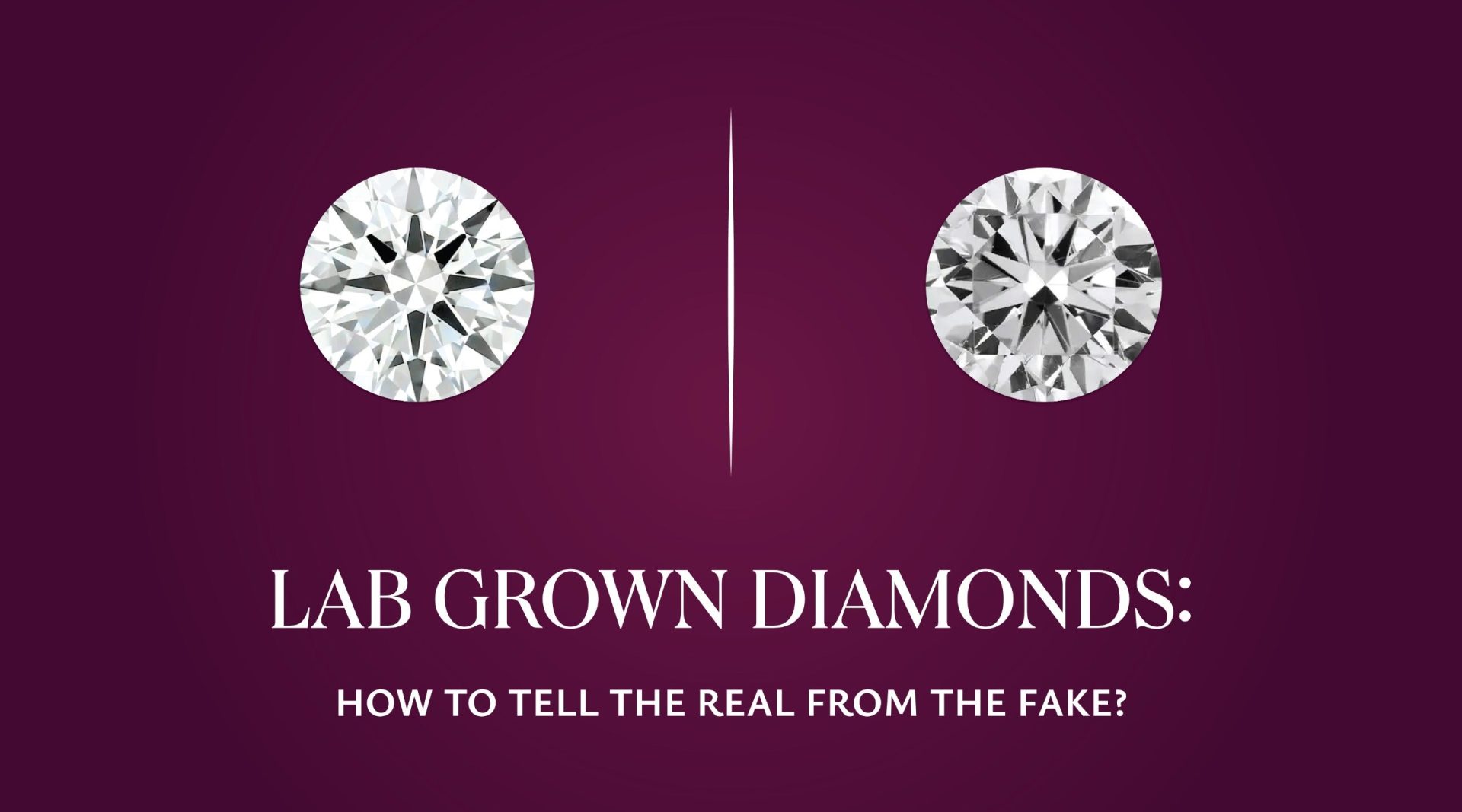
In the dynamic world of gemstones, distinguishing a real diamond from its many imitations is a vital skill for collectors, investors, and enthusiasts alike. Diamonds, beyond their dazzling aesthetics, symbolize enduring value and craftsmanship honed over centuries. However, the prevalence of synthetic stones and simulants poses significant challenges. Understanding the specific characteristics that authenticate a diamond protects buyers from potential fraud and reinforces the confidence necessary when acquiring this precious gem. Advances in gemology have combined traditional techniques and modern technology to improve identification accuracy, making the expertise accessible to a broader audience.
From simple at-home tests to professional equipment, the methods to confirm a diamond’s authenticity encompass physical, optical, and chemical analyses. Introductory evaluations such as thermal conductivity or fog tests provide immediate preliminary insights, yet only controlled laboratory assessments and certificates from recognized entities can definitively validate a diamond’s origin and quality. As the market evolves, comprehensive knowledge of these identification techniques becomes indispensable for ensuring ethical sourcing, preserving cultural heritage, and securing the financial interests tied to this remarkable gemstone.
In brief:
- Authenticity of diamonds requires a combination of at-home tests and professional assessments.
- Thermal conductivity and refractive index are pivotal distinguishing properties of real diamonds.
- Magnification reveals unique internal inclusions serving as a “fingerprint” for identification.
- Common simulants—cubic zirconia, moissanite, white sapphire, and glass—possess distinct optical and physical differences.
- Certified laboratory reports are the most reliable verification tools in the diamond evaluation process.
Fundamental Properties in Distinguishing Real Diamond Gemstones
Real diamonds exhibit extraordinary physical properties that set them apart from imposters. One primary attribute is their exceptional hardness, rated at 10 on the Mohs scale, which provides resistance to scratching unparalleled by other gemstones or simulants. Beyond hardness, diamonds are renowned for their high thermal conductivity, dissipating heat remarkably fast—a trait exploited in common “diamond tester” devices.
Another critical parameter is the refractive index (RI), which quantifies light bending within the stone. Diamonds demonstrate a unique combination of brilliance and fire resulting from their high RI and dispersion values. These optical properties create their signature sparkle—a key visual indicator that professionals evaluate to confirm authenticity. Furthermore, the specific gravity, measuring density relative to water, helps differentiate diamonds from less dense synthetic analogues.
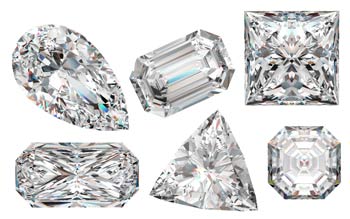
Magnification and Internal Characteristics: The Diamond’s Unique Signature
Examining diamonds under magnification reveals their internal inclusions and surface blemishes, which are as unique as fingerprints. Genuine diamonds naturally contain tiny crystals, fractures, or mineral deposits formed under extreme geological conditions over millions of years.
Lab-grown diamonds, while chemically identical, often have distinct metallic flux inclusions, and simulants like cubic zirconia possess none or display telltale gas bubbles. These subtle differences demand the use of a jeweler’s loupe or microscope for meticulous inspection. Identifying natural inclusions not only confirms authenticity but also provides insight into the diamond’s origin and value.
At-Home Methods to Gain Immediate Insights on Diamond Authenticity
Several accessible tests can be performed without specialized equipment to preliminarily assess a diamond gemstone’s authenticity. These methods, while not conclusive, offer practical tools for quick evaluation.
The fog test involves exhaling onto the surface of the stone; a genuine diamond disperses heat rapidly, causing the fog to vanish almost instantly. Conversely, imitators may retain condensation longer.
Another technique is the dot test, placing the stone over a printed dot on paper. Due to diamond’s unique refractive properties, seeing the dot clearly through the stone typically indicates a simulant. Additionally, the water test leverages density differences as diamonds sink, whereas many imitations float or sink slowly.
It is crucial to discriminate these tests’ limitations—for example, advanced synthetic stones occasionally mimic real diamond behavior in these straightforward trials. For comprehensive knowledge, detailed guides such as those found on diamond gemstone identification platforms provide further resources.
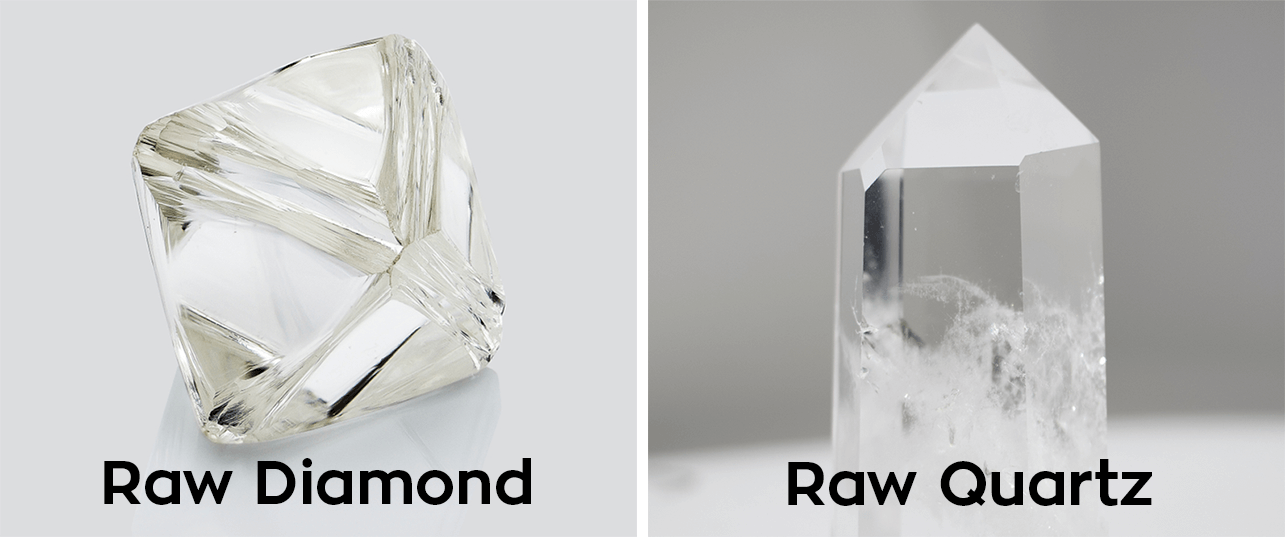
Professional Techniques: Definitive Tools for Accurate Diamond Authentication
While at-home evaluations inform initial judgments, authenticated diamond assessment rests on advanced instrumentation and expert analysis.
The thermal conductivity tester measures heat dissipation rates unique to diamonds. Instruments like diamond testers are calibrated to identify the rapid thermal response distinctive to natural diamonds, distinctly separating them from simulants such as cubic zirconia and moissanite.
Refractometers precisely measure the refractive index, providing objective data to confirm identity. Additionally, specific gravity tests assess density through water displacement, corroborating gemstone classification.
Moreover, ultraviolet light examination reveals fluorescence patterns in some diamonds, aiding provenance evaluation, although fluorescence varies widely among natural specimens.
Understanding Diamond Simulants and Their Distinguishing Characteristics
Diamond substitutes continue to complicate the market, with materials such as cubic zirconia, moissanite, white sapphire, and glass frequently masquerading as real diamonds. Recognizing their physical and optical discrepancies is essential.
Cubic zirconia naturally boasts a lower hardness and refractive index, exhibiting less brilliance and faster surface wear compared to diamonds. Its “too perfect” clarity and absence of natural inclusions further differentiate it. Moissanite, meanwhile, induces a characteristic double refraction and an exaggerated sparkle described as a “disco ball effect” under magnification, subtly divergent from a diamond’s brilliance.
White sapphires, although durable, demonstrate lower dispersion and often present a milky or cloudy clarity not typical of diamonds. Glass remains the least convincing imitator, showing bubbles under magnification, lower density, and susceptibility to scratching.
Awareness of these factors, supported by references like the four Cs grading system, equips buyers to discern gemstones with confidence.

Securing Authenticity Through Certification and Ethical Sourcing
For any significant diamond acquisition, especially for investment or heirloom purposes, obtaining certification from reputable gemological institutions provides irrefutable validation. Labs such as the GIA (Gemological Institute of America), IGI (International Gemological Institute), and AGS (American Gem Society) deliver detailed reports documenting the diamond’s characteristics, treatments, and origin.
Additionally, choosing diamonds obtained via ethical sourcing practices ensures conformity to environmental and social standards, adding intrinsic value beyond mere aesthetics. Comprehensive knowledge of the supply chain from mine to market enables consumers to make conscientious choices supporting responsible diamond commerce today.