
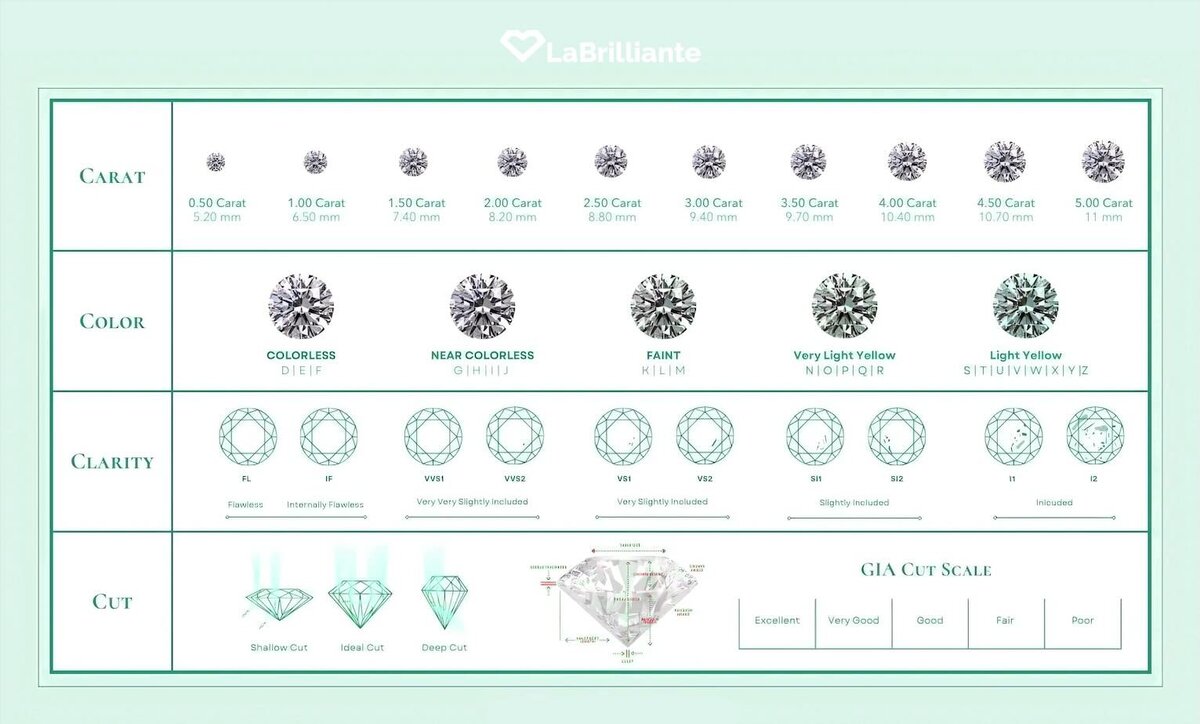
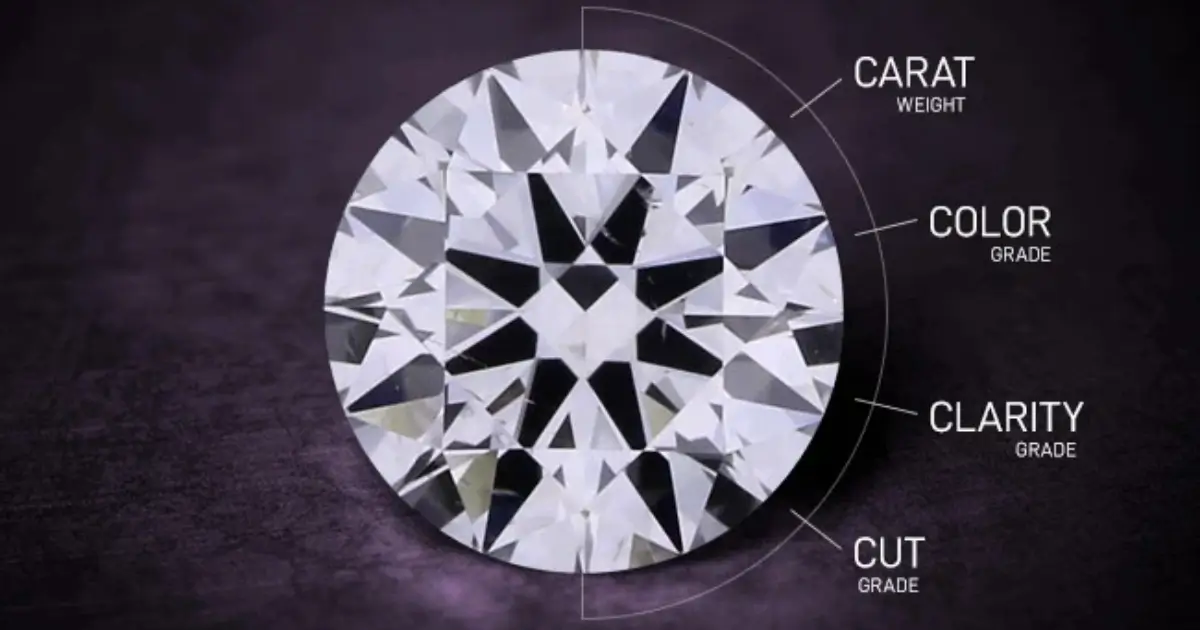
In the realm of fine jewelry, diamonds stand out as symbols of elegance and value, but understanding what truly defines their worth extends beyond surface sparkle. The 4Cs—Cut, Clarity, Color, and Carat Weight—form the backbone of diamond grading, a standardized assessment developed to ensure consistent evaluation worldwide. This comprehensive framework not only aids in determining a diamond’s intrinsic qualities but also guides buyers in making informed choices that align with both aesthetic preferences and financial considerations. Since Robert M. Shipley and the Gemological Institute of America introduced this system in the mid-20th century, it has revolutionized the diamond market by bringing transparency and precision to what was once a subjective art.
Evaluating a diamond requires more than a cursory glance; it involves meticulous analysis of its optical performance, internal purity, color absence, and physical mass. These four factors interact intricately—where a superior cut can enhance brilliance even in stones with modest color or clarity, and optimal proportions may allow smaller diamonds to outshine larger, poorly cut counterparts. By mastering the 4Cs concept, consumers and professionals alike gain a shared language to compare stones and assess value accurately, enabling smarter, more confident diamond purchasing decisions.
In brief:
- The 4Cs grading system (Cut, Clarity, Color, Carat Weight) is the global standard for diamond evaluation.
- Cut quality has the most significant effect on a diamond’s brilliance and perceived size.
- Clarity grades assess internal imperfections; many diamonds graded SI1 or VS2 appear eye-clean.
- Color scale ranges from D (colorless) to Z (noticeable tint), with near-colorless stones offering value without visible compromise.
- Carat weight affects rarity and price, but optimal proportions often trump sheer size.
- Certified grading reports from reputable labs ensure transparency and fair value in diamond transactions.
- Understanding the interplay among the 4Cs enables balanced purchasing tailored to personal preferences and budgets.
Historical Development and Importance of the 4Cs Diamond Grading System
Before the 1950s, diamond evaluation relied heavily on vague descriptors such as “superfine” or “extra gem quality.” These terms lacked consistency, resulting in confusion and mistrust among jewelers and buyers. Recognizing this challenge, Robert M. Shipley of the Gemological Institute of America pioneered the 4Cs framework—Cut, Clarity, Color, and Carat Weight—to create a universally accepted classification. This systematic approach transformed diamond commerce by standardizing grading practices and facilitating clearer communication across the industry.
The Gemological Institute of America refined this model further, introducing rigorous assessment methodologies and issuing the first standardized diamond grading reports in 1953. Today, this grading system remains the cornerstone for identifying a diamond’s quality and market value, relied upon globally by top gemological laboratories and jewellery retailers alike. The system’s enduring relevance underscores its effectiveness in demystifying the complex characteristics that define a diamond’s uniqueness and price.
Cut Quality: The Crucial Element Influencing Sparkle and Value
Of all the 4Cs, cut quality exerts the greatest influence on a diamond’s visual performance. It encompasses the precision of proportions, symmetry, and polish, which collectively determine how light travels within the stone, resulting in brilliance, fire, and scintillation. Diamonds with an Excellent cut rating reflect nearly all incoming light, showcasing maximum sparkle that can exceed the appeal of larger diamonds with inferior cuts.
This distinction is not merely aesthetic; pricing data confirms that diamonds graded with Excellent cut often command a 10–15% premium compared to those categorized as Good cuts, reflecting their superior optical behavior. Notably, the GIA provides comprehensive cut grades mainly for round brilliant diamonds, while other fancy shapes are assessed individually for polish and symmetry, though lacking an overall cut grade.
The Range and Role of Clarity Grades in Valuing Diamonds
Clarity gauges the presence of inclusions and blemishes inherent from a diamond’s natural formation. These internal and external characteristics are evaluated under 10× magnification, with grades spanning from Flawless (FL) to Included (I1-I3). While Flawless stones are extremely rare and command top dollar, many diamonds graded VS2 or SI1 are effectively “eye-clean,” showing no visible internal flaws to the naked eye, thus offering excellent value.
This nuance allows buyers to prioritize visual purity over perfection under magnification, enabling subtle trade-offs that preserve aesthetics and reduce costs. Understanding clarity grades can prevent overpaying for imperceptible perfection and encourage selecting stones with optimal balance across the 4Cs.
Navigating the Colour Spectrum: Impact on Prices and Appearance
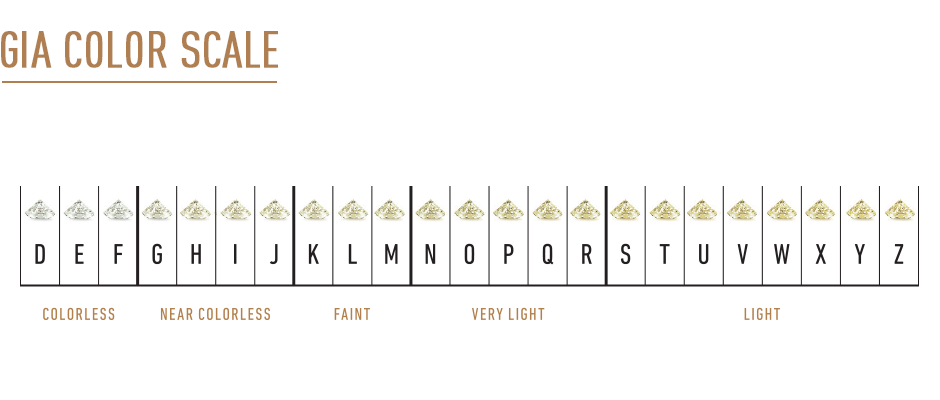
In the context of the 4Cs, diamond color specifically refers to the absence of any body tint within white diamonds. The GIA color grading scale stretches from D (completely colorless) to Z (light yellow or brown tint), divided into categories such as Colourless, Near Colourless, Faint, Very Light, and Light. Colourless diamonds (D–F) are rare and often command premium prices, whereas near-colourless grades (G–J) offer visually similar appeal at considerably lower costs.
Strategic selection plays a pivotal role here. For example, a G-color diamond with an excellent cut can, to the unaided eye, appear whiter than a higher color grade diamond with a poor cut. Ring settings also influence perceived color; yellow and rose gold settings can mask subtle tints, allowing lower color grades to maintain a bright appearance. Understanding these interactions empowers buyers to make both aesthetically pleasing and financially prudent choices. For deeper insights on diamond grading, explore comprehensive guides available that cover diamond and gemstone quality factors.
Carat Weight: Balancing Size, Rarity, and Price
Carat weight quantifies the diamond’s mass, with one carat equivalent to 0.2 grams. While larger carat size correlates with higher rarity and escalating price, buyers should note that two diamonds of equal weight can exhibit different face-up sizes depending on their cut. This underscores the interdependence between carat and cut in delivering visual impact.
Market phenomena known as “magic sizes” (e.g., 0.50, 1.00, 1.50 carats) often trigger significant price jumps. For instance, a 0.90-carat diamond may cost notably less than a 1.00-carat counterpart with identical grading, despite similar visual dimensions. Savvy buyers capitalize on this by selecting diamonds just below these thresholds without compromising appearance, achieving excellent value.
The Synergy of the 4Cs: Making Balanced Diamond Selections
Evaluating the 4Cs independently can be misleading; their interplay dictates a diamond’s overall appeal and price. For example, prioritizing an excellent cut can enhance brilliance so effectively that it elevates a lower color grade diamond above a higher color grade stone with a poor cut. Similarly, eye-clean clarity grades often satisfy visual purity, allowing allocation of budget towards cut and carat for optimal impact.
Many buyers discover that a balanced combination of the 4Cs yields a more captivating and cost-effective diamond than selecting extremes in any single category. Such informed decisions rely on understanding these nuanced relationships, which continues to evolve thanks to ongoing research by gemological institutions.