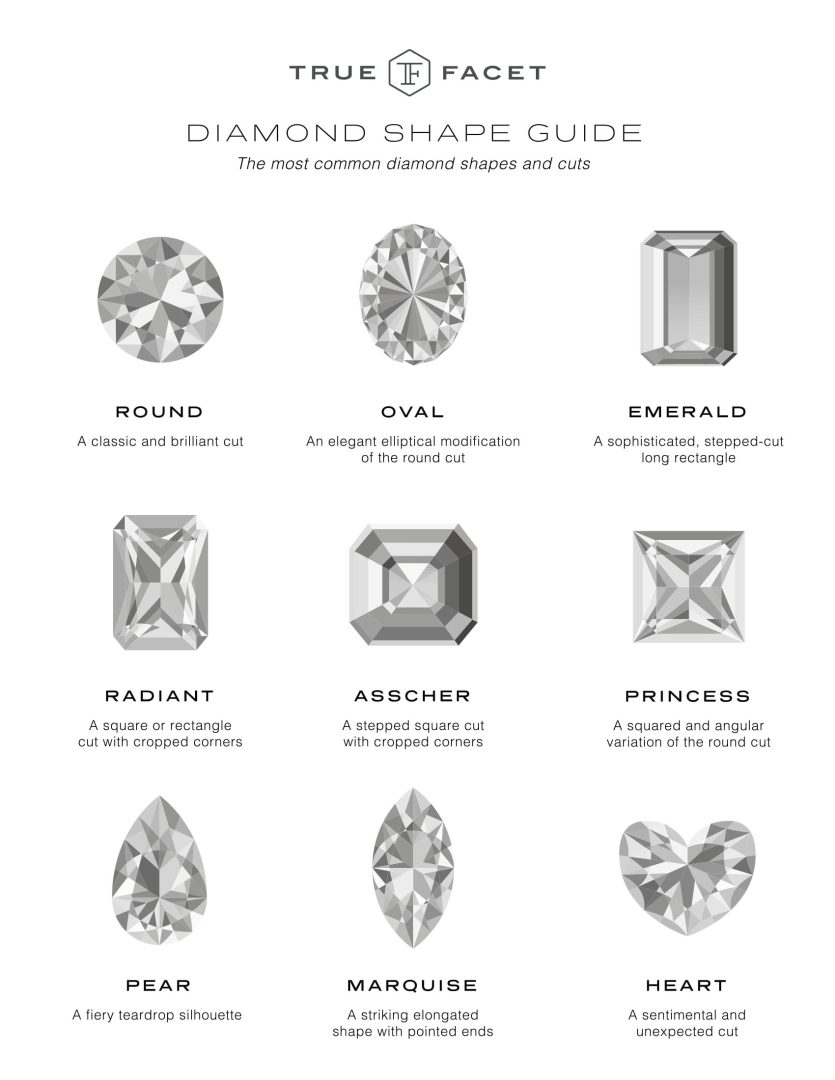
Choosing the right diamond shape is a critical step in selecting the perfect gemstone, whether for an engagement ring, a pendant, or a collectible piece. Diamonds are not only valued for their clarity, color, and carat weight but their cut and shape profoundly influence their brilliance and personal appeal. In the evolving market of 2025, understanding the diverse diamond silhouettes alongside their unique optical effects becomes essential in making an informed choice that reflects your individual style and investment value. This guide navigates through ten popular diamond shapes, delineating their standout features and offering insights into how each shape harmonizes with different tastes and lifestyles.
Key insights from this guide include:
– How the diamond cut affects light reflection and brilliance.
– Differences between classic and modern diamond shapes.
– Understanding the significance of symmetry and facet arrangements in the overall gem quality.
– Economic factors influencing price variations among diamond shapes.
– Practical tips for aligning diamond shapes with personal style and ring settings.
The science behind the diamond cut: Defining brilliance and shape for optimal sparkle
When evaluating diamonds, the term ‘cut’ extends beyond mere shape, incorporating proportions, symmetry, and polish that directly impact a stone’s ability to reflect light. For example, the round brilliant cut remains the most prevalent for its 58 precision-cut facets that channel maximum light return, delivering unmatched scintillation. Its symmetrical 360-degree form enables it to cast exceptional brightness, which is why it accounts for nearly three-quarters of diamonds sold globally.
Conversely, the princess cut, first introduced in 1980, combines efficiency and elegance with its square or rectangular layout and sharp 90-degree corners. This cut allows two diamonds to be fashioned from one rough stone, often offering a more affordable price per carat without compromising on brilliance. The variance in facet count, usually between 50 and 58, further modulates its sparkle performance.
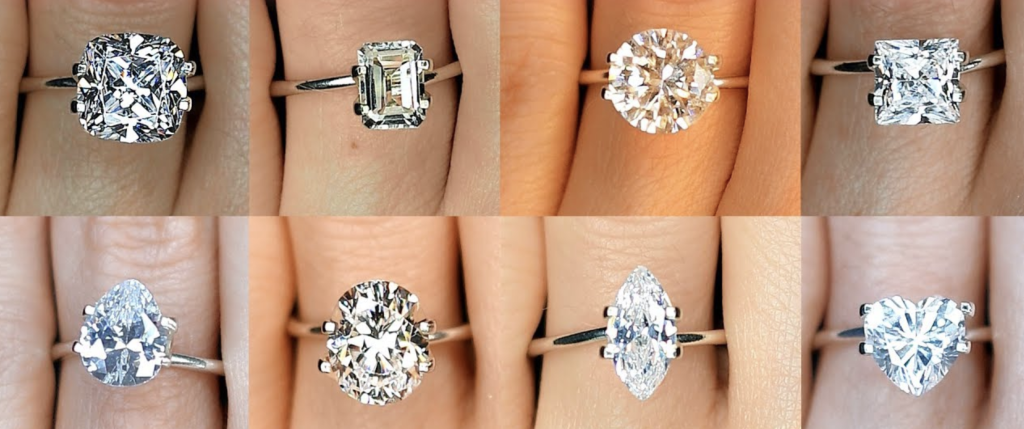
Exploring elongated and vintage-inspired diamond shapes
The oval cut is prized for its elegant lengthening effect on fingers and the impression of larger size, largely attributable to its extended silhouette. However, potential buyers should be mindful of the “bow-tie effect,” a dark, shadow-like pattern traversing the stone’s center, commonly observed in shapes such as oval, marquise, and pear. While a slight bow-tie effect can enhance character, greater prominence may suggest suboptimal cutting.
Historically rich shapes like the emerald cut, dating back to the 16th century, employ step facets that emphasize clarity through large, parallel facets producing a gallery-like light reflection. Its rectangular form with clean lines suits those who favor understated sophistication and vintage artistry.
Unconventional and symbolic diamond shapes: Making a personal statement
For wearers who desire symbolism in their gemstones, the heart-shaped diamond stands out as a poignant expression of love. Meticulous symmetry is critical here; each half of the heart must mirror the other perfectly to maintain visual harmony. Anomalies in proportion can weaken the emotional impact and aesthetic value.
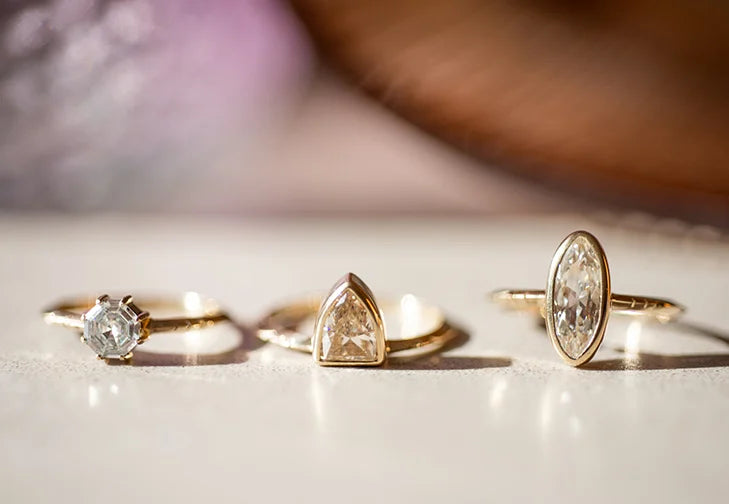
Other distinct shapes such as the marquise cut, which originated in the court of King Louis XV of France, feature an elongated football silhouette that maximizes surface area and offers dramatic finger elongation. Though visually striking, it demands precise symmetry, particularly aligning the two pointed ends, to ensure balanced light performance and aesthetic placement in jewelry.
Balancing practicality and luxury: The allure of cushion and radiant cuts
The cushion cut diamond combines a soft, pillow-like shape with rounded corners and has enjoyed renewed popularity since the 1920s for its romantic, antique feel. It typically offers less brilliance than round cuts but compensates through enhanced fire—the dispersion of light into colors.
Meanwhile, the radiant cut merges the sharp edges of an emerald cut with the fiery brilliance of a round cut, lending it both resilience and sparkle. Since its creation by Henry Grossbard in 1997, it has appealed to those seeking a vibrant yet stable gemstone.
Understanding the multifaceted nature of diamond cuts not only aids in selecting the precise style that resonates with your identity but also optimizes your investment in truly spectacular jewelry. For deeper knowledge on diamond grading encompassing the four Cs—cut, color, clarity, and carat weight, or guidance on purchasing diamond gemstones, valuable resources are available to support your journey toward the perfect gem.