Diamonds are not merely symbols of luxury; they are geological masterpieces forged by nature through processes spanning millions to billions of years. These precious stones originate from the Earth’s deep mantle or even from cosmic events, their crystalline structure resulting from extreme conditions unique to their environment. Understanding how diamonds are formed enriches our appreciation for their complexity and rarity, revealing a saga that extends far beyond their sparkling allure in jewelry.
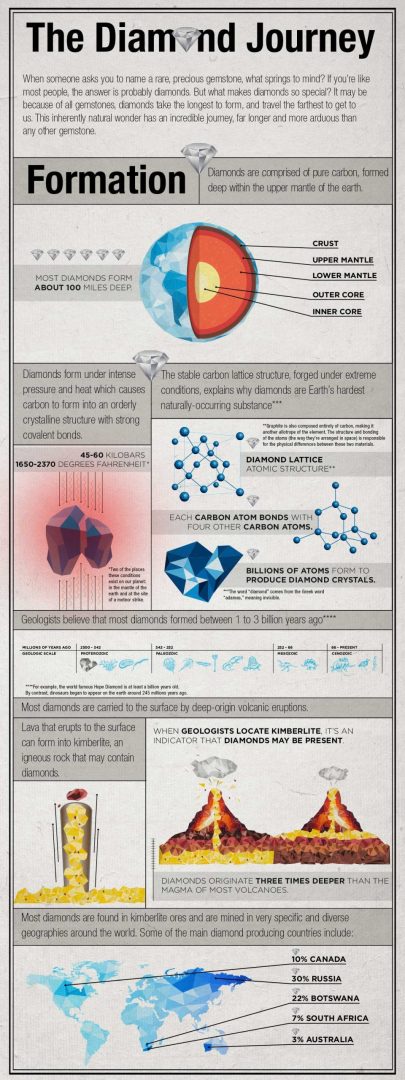
Key insights encapsulate the essence of diamond formation: Natural diamonds arise from pure carbon subjected to profound heat and pressure deep underground, often between 140 to 190 kilometers below the Earth’s surface. Their creation is linked to tectonic shifts and meteorite impacts, debunking myths such as diamonds originating from coal. Additionally, some diamonds have extraterrestrial origins, forming within meteorites themselves. Recognizing these scientific realities enhances our knowledge of diamonds’ intrinsic value and guides ethical sourcing and appreciation of their rarity.
The Scientific Formation Process of Natural Diamonds in the Earth’s Mantle
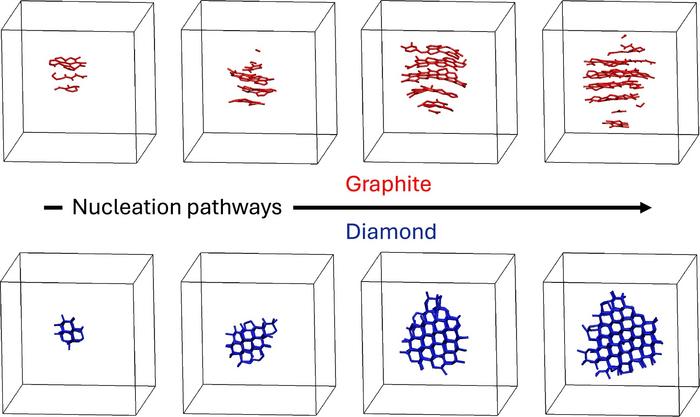
Natural diamonds form primarily in the Earth’s mantle at depths ranging from 140 to 190 kilometers beneath the surface. At these depths, carbon atoms experience intense pressure approximately 45,000 times atmospheric pressure and temperatures between 1000 and 1300 °C. Under such extreme thermodynamic conditions, carbon atoms reorganize into a crystal lattice with a cubic structure, resulting in the creation of diamonds. This mineralogical transformation underscores why diamonds are the hardest naturally occurring substance. This formation differs fundamentally from other gemstones, which arise through conventional mineral crystallization.

Impact of Tectonic Plate Movements on Diamond Genesis
The dynamic movement and collision of tectonic plates significantly influence the formation and ascendancy of diamonds. When continental plates converge, they induce immense geological pressures that thrust carbon-bearing materials further into the Earth’s mantle, optimizing conditions for diamond crystallization. Subsequently, volcanic activity linked to tectonism propels diamonds closer to the surface through kimberlite and lamproite pipes, making their recovery feasible. This interplay highlights a critical connection between earth sciences and gemology, illustrating the importance of plate tectonics in the distribution of diamonds from mine to market.
The Extraterrestrial Origins: Meteorite Impacts and Spaceborne Nanodiamonds
Apart from terrestrial genesis, some diamonds owe their origins to cosmic events. Meteorite impacts on Earth generate sudden, extreme heat and pressure conditions that briefly mirror those within the Earth’s mantle, enabling the spontaneous formation of diamonds. Though typically small, these impact diamonds are rare and scientifically valuable due to their unique formation circumstances. Moreover, nanodiamonds discovered within certain meteorites trace back to ancient cosmic events, originating from the condensation of carbon during star formation epochs. These findings enrich our understanding of rare diamond discoveries and extend diamond studies beyond terrestrial geology.

Debunking the Coal Myth: What Diamonds Are and Are Not
A prevalent misconception is that diamonds are formed from coal under pressure. This is scientifically inaccurate. Diamonds do not arise from coal because the environmental and geological conditions for diamond synthesis occur deep in the Earth’s mantle where coal deposits do not exist. While both coal and diamonds consist primarily of carbon, coal forms from decomposed plant material in sedimentary environments near the surface, whereas diamonds form through the recrystallization of carbon atoms subjected to intense pressure and heat far below ground. For a nuanced understanding of diamond composition and its terminology, consult the diamond terminology glossary.
Why the Formation Process Enhances the Value and Uniqueness of Natural Diamonds
The extraordinary geological journey of natural diamonds from deep earth or cosmic events to the surface defines their rarity and intrinsic value. This intricate formation not only contributes to their physical properties such as hardness but also to their coveted status in society. Beyond physical attributes, the cultural resonance and ethical considerations in diamond acquisition are equally critical. Awareness of the geological origins fosters an appreciation of their authenticity and supports sustainable practices, as documented in resources on ethical sourcing diamonds. Furthermore, detailed knowledge about how diamonds differ from other gemstones enriches both the scientific and connoisseur communities, aligning with comprehensive guides on diamonds versus gemstones.